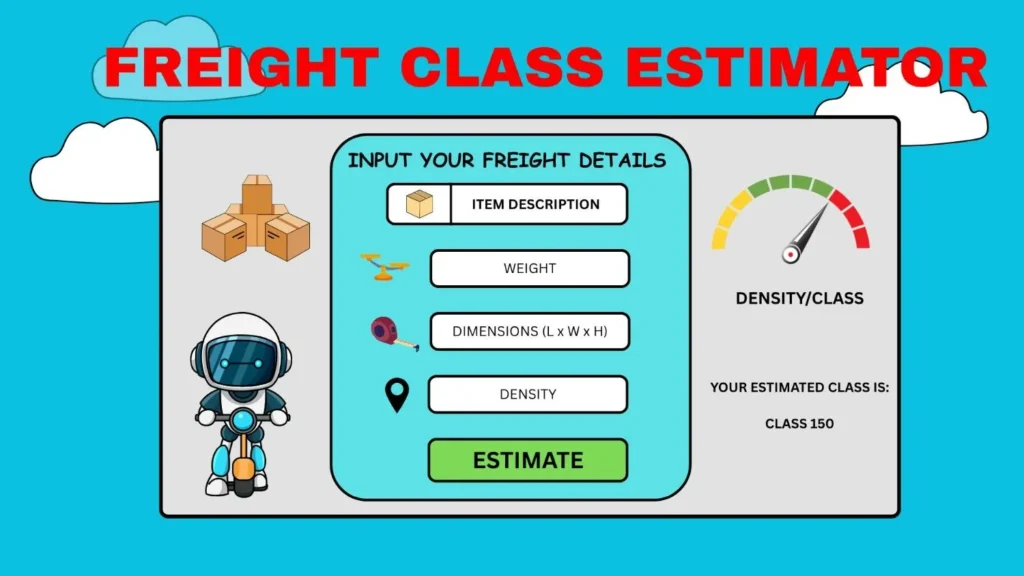
Freight shipping may be complicated, particularly when companies have to decide on the appropriate freight class prior to the transportation of goods via LTL carriers. The National Motor Freight Classification is one of the systems that are significant in the logistics industry because they assist in standardizing the process of categorizing and pricing freight.
Most shippers find it difficult to determine the correct class by hand since it involves proper measurements and calculation of densities. This is where a freight class calculator becomes useful. Companies can easily estimate the correct class by entering shipment-related details, like weight and dimensions. An NMFC Freight Class Calculator minimizes mistakes, allows saving time, and assists in providing accurate shipping quotes. Let’s dive into this.
What Is NMFC in Freight Shipping
NMFC is a standard system that has been adopted in the trucking industry to categorize freight deliveries. The National Motor Freight Traffic Association developed and upheld it as a means of uniformity in describing the cost of shipping. LTL carriers assign an NMFC code to each product shipped by companies that are related to a freight class. These classes are between 50 and 500 and they are based on different variables of density, handling prerequisites, liability risk, and stowability. Due to the complex nature of such codes, most shippers use the NMFC Freight Class Calculator to estimate proper classification before they organize transport of their products.
What Is an NMFC Freight Class Calculator?
The NMFC Freight class calculator is a web-based tool that helps to make it easy to classify freight. Users do not need to manually compute shipment density and then compare the results with complicated classification tables but simply enter a few shipment details and receive instant results. In the case of a regular freight class calculator, the length, width, height, and total weight of the shipment must be provided.
After entering these values, the tool calculates the density and gives estimates of the correct freight class. Using the NMFC Freight Class Calculator is also highly beneficial to businesses that regularly ship pallets or big packages, since it can assist in proper classification and minimize the risks of becoming surprised by the shipping fees.
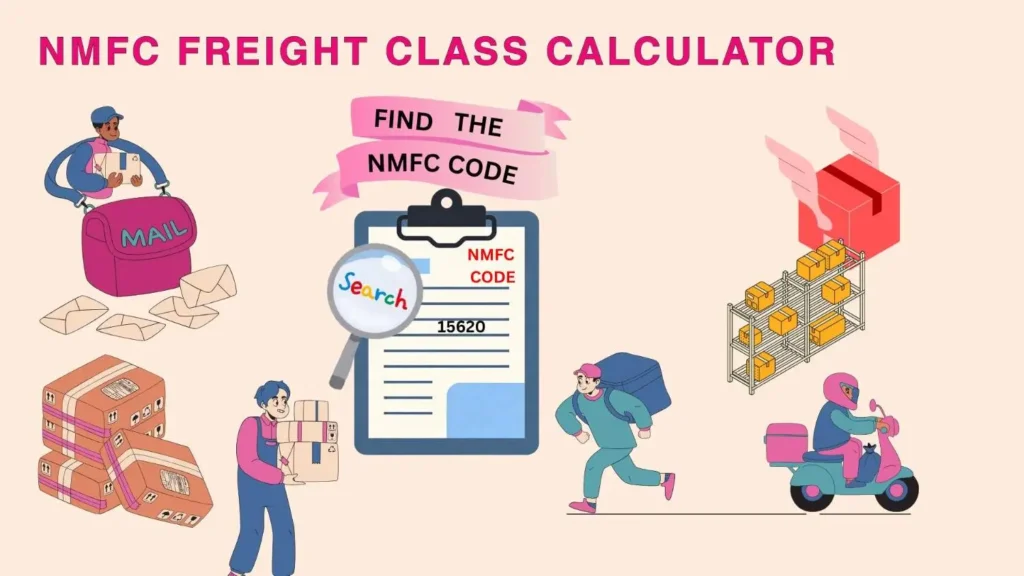
How to Calculate Freight Class Using NMFC
Manual calculations for freight classes require multiple procedures and precise measurements. The first step is to calculate the cubic volume of the shipment by measuring its length, width, and height. The next step is to provide measurements in cubic feet and divide the weight of the shipment by that volume and determine the density.
After the density is determined, the official NMFC (National Motor Freight Classification) density chart can be compared with it to determine the appropriate freight class. This process, however, may be time-consuming to businesses that have more than one load in a day. An NMFC Freight Class Calculator makes the whole task much easier by automatically calculating the values and assisting users in easily deciding on the freight class to use.
Benefits of Using an NMFC Freight Class Calculator
Using an NMFC Freight Class Calculator offers several benefits to businesses in the field of freight shipping. Enhanced accuracy is also a significant advantage since the calculator minimizes the chances of human error during calculation of freight density and freight classification. The other benefit is saving time, as the tool can calculate results in real-time rather than using manual formulae.
A reliable freight class calculator will also assist companies in avoiding reclassification fees that normally arise when freight carriers learn wrong information regarding the classes. It is also a tool that helps businesses better estimate shipping costs and more dependably plan logistics operations.
Conclusion
Freight classification is a crucial factor in deciding the shipping rates, as well as facilitating smooth transportation processes. Learning NMFC codes and freight classes can ensure that companies do not make expensive errors when planning shipments using LTL companies. Although NMFC codes can be calculated manually, this process is time-consuming and prone to errors.
That is why a lot of shippers use an NMFC Freight Class Calculator to make the procedure simpler and receive fast, valid estimates. With a trusted calculator, business can become more accurate, logistics can be planned more easily, and the shipments of freight will be assigned the appropriate category before reaching the carrier.
FAQ’s
Q1. What is an NMFC freight class calculator?
An NMFC freight class calculator is a web-based tool that estimates shipment weight and dimension as a freight class. It calculates density and assists businesses to identify the correct freight classification in LTL shipping.
Q2. How does freight class affect LTL shipping?
Shipping rates are based on freight class in LTL shipments. It takes density, handling, liability, and stowability into account. A freight class calculator also allows a shipper to estimate the appropriate class and prevent surprises.
Q3. What information is needed to use an NMFC freight class calculator?
To operate an NMFC freight class calculator, you have to provide a shipment’s length, width, height, and total weight. The measurements enable the tool to determine density and estimate the right freight class.
Q4. Can a freight class calculator help reduce shipping costs?
Yes, a freight class calculator will save money in shipping costs through proper classification. Proper freight class data avoids reclassification expenses, enhances shipping price quotations and facilitates better logistics planning.
Q5. Who should use an NMFC freight class calculator
An NMFC freight class calculator can be helpful to freight brokers, logistics managers, warehouse operators, manufacturers, and businesses shipping palletized goods that require precise estimates of the freight classes before they have transportation organized.